Underwater Pelletizing System vs Strand Pelletizer | Technical Comparison & Applications
2025 RUIZHI UNDERWATER PELLETIZER
In plastic extrusion and recycling projects, choosing between an underwater pelletizing system, an underwater pelletizer, and a strand pelletizer is a critical engineering decision. Each pelletizing technology has distinct process characteristics, cost structures, and material suitability. Understanding these differences helps engineers, project managers, and international B2B buyers select the right solution for stable production, consistent pellet quality, and long-term operational efficiency.This article provides a technical, application-oriented comparison of the underwater pelletizing system vs strand pelletizer, focusing on real industrial scenarios rather than marketing claims.
What Is an Underwater Pelletizing System?
An underwater pelletizing system cuts molten polymer directly at the die face while pellets are immediately quenched and transported by a closed-loop water circuit. The core component, the underwater pelletizer, integrates a rotating knife hub, die plate, water chamber, and downstream drying and conveying equipment.
Key Process Characteristics
- Pellet cutting occurs under water
- Suitable for **high melt temperatures and viscosities
- Enables **continuous, automated operation
- Consistent pellet shape and size under stable process conditions
Underwater pelletizing is widely used in high-output compounding lines, plastic recycling systems, and specialty polymer production where process stability is critical.
Large-scale underwater systems are widely adopted in high-output compounding lines and recycling projects, where production stability and pellet consistency are critical.
For smaller pilot lines or R&D applications, compact underwater pelletizers provide similar processing advantages with lower investment and footprint.
What Is a Strand Pelletizer?
A strand pelletizer cuts polymer strands after they exit the die, pass through a water bath, and are air-dried before cutting. This is a mechanically simpler system and has been widely adopted for decades.
Key Process Characteristics
- Strands are extruded, cooled, and pulled
- Cutting occurs outside the water
- Lower system complexity
- More manual intervention compared to underwater systems
Strand pelletizers are common in small-to-medium capacity lines, R&D environments, and materials with stable melt strength.
Underwater Pelletizer vs Strand Pelletizer: Core Differences
From an engineering perspective, the main differences lie in process control, automation level, material compatibility, and scalability.
Process Stability
- Underwater pelletizing system: High stability for fluctuating melt flow
- Strand pelletizer: Sensitive to strand breakage and cooling consistency
Automation Level
- Underwater systems support fully automated start-up and shutdown
- Strand systems typically require manual strand threading and monitoring
Material Flexibility
- Underwater pelletizing handles low melt strength and sticky polymers better
- Strand pelletizing performs best with materials that maintain strand integrity
Comparison Table: Underwater Pelletizer vs Strand Pelletizer
| Feature | Underwater Pelletizing System | Strand Pelletizer |
| Cutting Method | At die face, underwater | Dry cutting of cooled strands |
| Automation Level | High | Medium to low |
| Capacity Range | Medium to very high | Low to medium |
| Pellet Shape Consistency | Excellent | Good (process-dependent) |
| Maintenance Complexity | Higher | Lower |
| Operator Intervention | Minimal | Frequent |
| Suitable Materials | PET, TPU, EPS, recycled plastics, high-viscosity compounds | Polyolefins, stable compounds |
| Typical Applications | Compounding, recycling, high-output extrusion | Small lines, labs, standard extrusion |
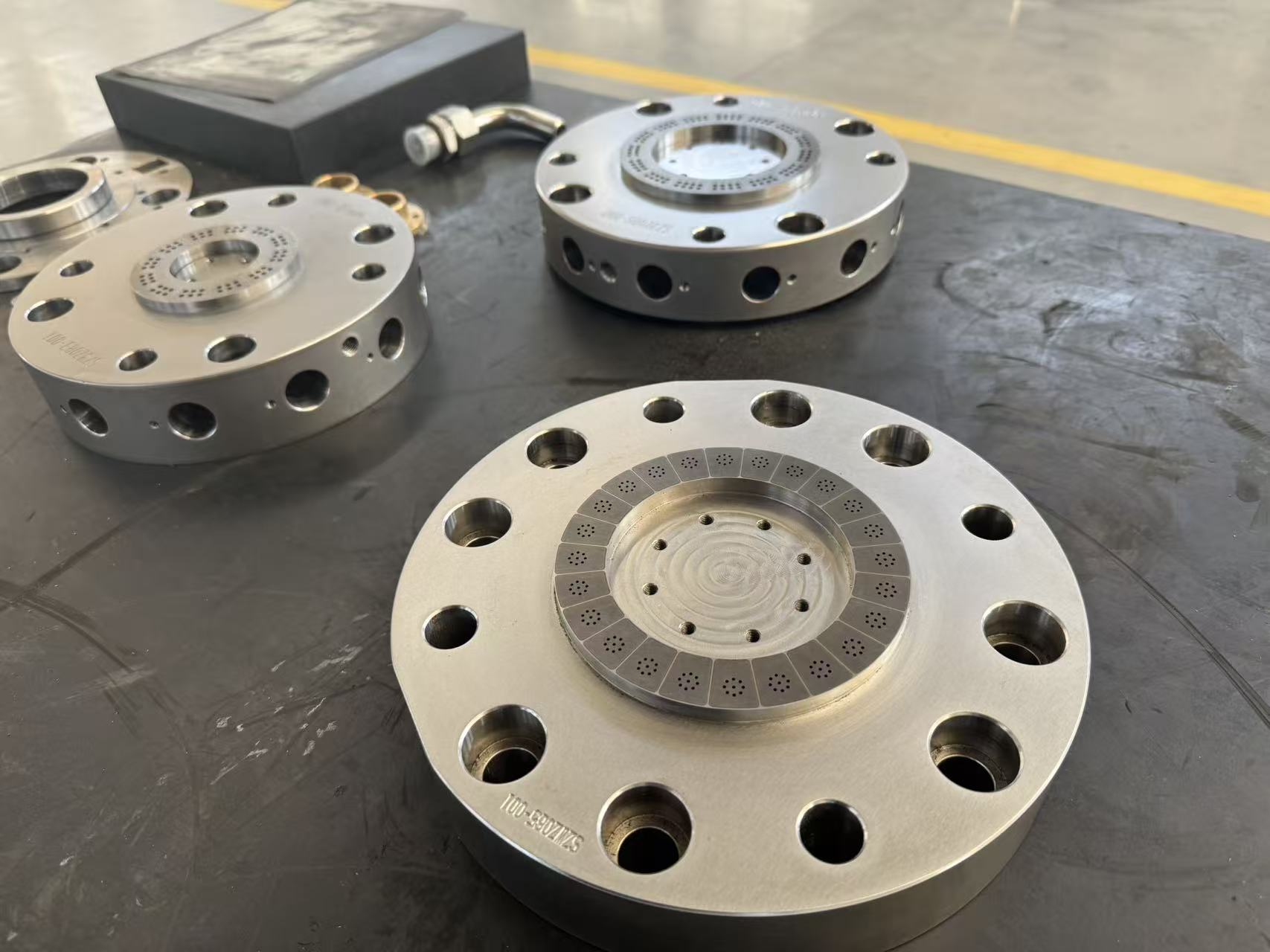
RUIZHI DIE PLATE
Industrial Application Scenarios
Plastic Recycling Lines
In underwater pelletizing systems for plastic recycling, material variability is common due to mixed feedstock, contamination, and fluctuating melt flow. EPS and rEPS recycling projects especially benefit from underwater cutting because pellet formation is immediate, cooling is uniform, and consistent pellet geometry is achieved. Underwater pelletizing offers:
- Better tolerance to melt pressure fluctuations
- Reduced strand breakage
- Higher line uptime
This is why many large-scale recycling plants prefer underwater systems over strand pelletizers.
High-Viscosity and Filled Compounds
Materials with high filler content, flame retardants, or reinforcing additives often exhibit unstable strand formation. Underwater pelletizers eliminate strand handling issues and provide more reliable pellet quality.
EPS and Low Bulk Density Materials
EPS and foamed compounds benefit significantly from underwater cutting because immediate pellet formation and uniform cooling improve downstream process compatibility. Advanced EPS processing equipment can further optimize bead formation and product quality:
- Pellet formation is immediate
- Cooling is uniform
- Pellet geometry is more consistent
Industry Updates
For engineers and plant managers, staying updated on underwater pelletizing technology developments helps guide equipment selection and process optimization.
PET and Engineering Plastics
For PET, TPU, and engineering polymers requiring precise pellet size and low dust generation, underwater pelletizing provides better downstream process compatibility.
Considerations When Choosing Between the Two Systems
When evaluating underwater pelletizer vs strand pelletizer, decision-makers should consider:
1. Throughput requirements – higher outputs generally favor large-capacity underwater systems
Higher outputs generally favor underwater pelletizing.
2. Material behavior
Low melt strength or sticky materials are better suited to underwater systems.
3. Operational skill level
Strand pelletizers rely more heavily on experienced operators.
4. Maintenance strategy
Strand systems are mechanically simpler but may incur higher downtime.
5. Future scalability
Underwater systems are easier to integrate into fully automated plants.
Role of China Underwater Pelletizer System Manufacturers
In recent years, China underwater pelletizer system manufacturers have expanded their engineering capabilities, particularly in:
- Modular system design
- Integration with recycling and compounding lines
- Customization for different polymers and capacities
For international buyers, supplier evaluation should focus on technical documentation, reference projects, after-sales support, and system integration experience rather than origin alone.
Frequently Asked Questions (FAQ)
1. Is an underwater pelletizing system always better than a strand pelletizer?
No. Strand pelletizers remain suitable for low-capacity lines, stable materials, and applications where simplicity is preferred.
2. Can underwater pelletizing handle recycled plastics with contaminants?
Yes, underwater systems generally tolerate material fluctuations better, but upstream filtration and melt quality control remain essential.
3. What maintenance challenges do underwater pelletizers have?
Knife wear, sealing systems, and water circulation require regular inspection, but predictive maintenance reduces unplanned downtime.
4. Is pellet quality always superior with underwater pelletizing?
Pellet consistency is typically better, but overall quality still depends on die design, process control, and material preparation.
Conclusion
The choice between an underwater pelletizing system and a strand pelletizer should be based on material characteristics, production scale, automation goals, and long-term operational strategy. Underwater pelletizing excels in high-output, demanding, and recycling-focused applications, while strand pelletizers remain practical for simpler and smaller-scale processes.
For engineers and project managers planning new extrusion or recycling lines, a detailed technical evaluation—rather than a one-size-fits-all approach—ensures the pelletizing system aligns with both current needs and future expansion.
If you require technical consultation or a customized pelletizing solution based on your material and capacity requirements, professional engineering support can help optimize system selection and long-term performance.